
Fine Balance
(A Site-Specific Sculpture for Water Street in Petaluma, California)

As one approaches Water Street, mysterious figures will be visible in the distance. A curious image of five Cast Iron Victorian claw and ball bathtubs, seventeen to twenty four feet balancing on thin stilts, as if ambling in mid step along the waterfront. Their presence suggests that something unusual is happening here.
While the artwork is open to interpretation by the viewer, several attributes of the site and its history influenced this concept. The use of the antique claw and ball, cast iron, bathtub form links to Petaluma’s Victorian roots and the preservationist efforts that have maintained the town’s distinctive architectural character.


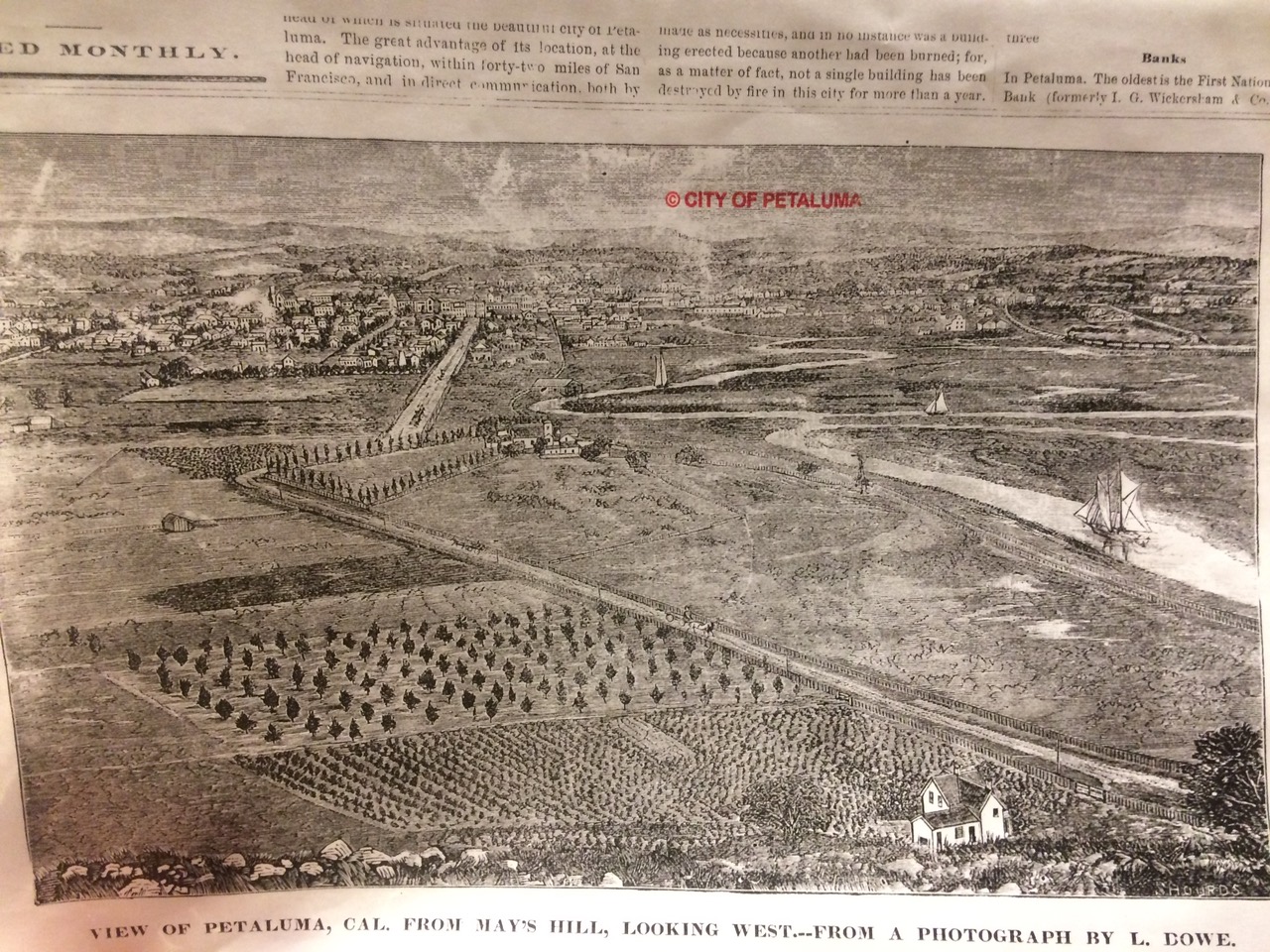
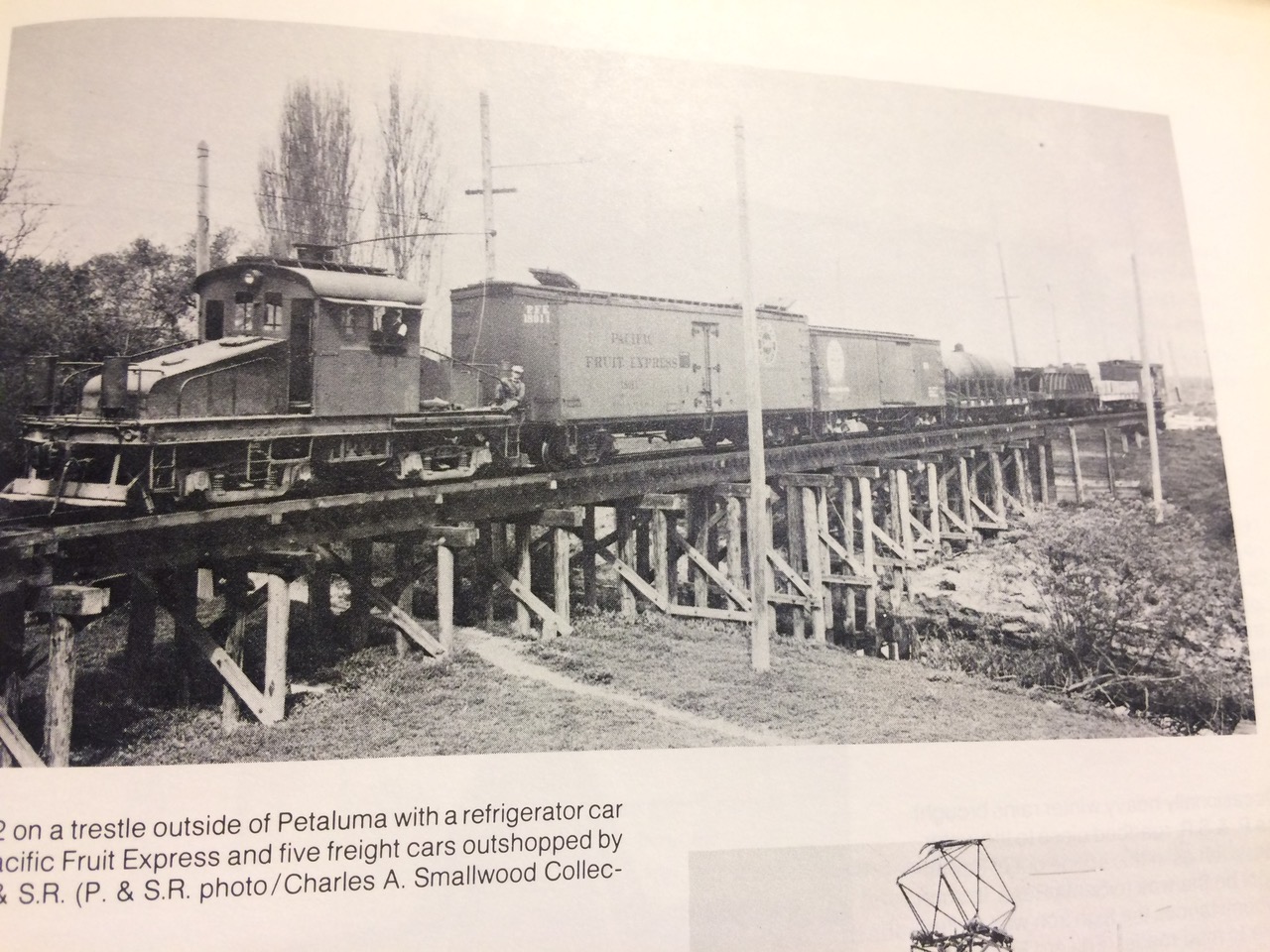

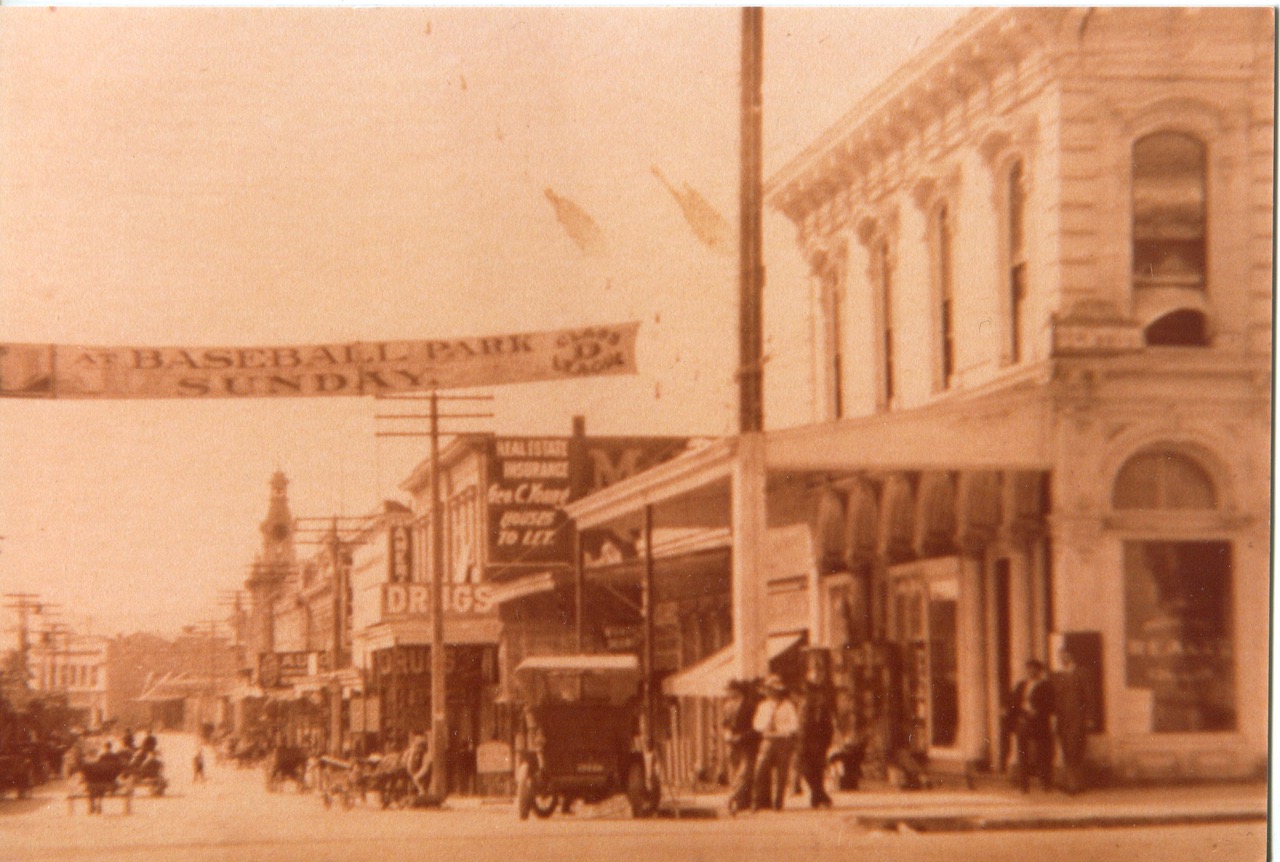
Since the California Gold Rush, Petaluma and the Petaluma River have both served as a vital trading hub and shipping corridor with San Francisco. Local eggs and produce were exchanged for manufactured goods, including the iron facades of many historical buildings in downtown Petaluma. Cast iron claw and ball bathtubs were also received from trade with San Francisco and supplied to the growing community. Many claw and ball bathtubs procured from this trade activity are still in use at many local residences. We are using some of these specimens to create the work.
Cast iron claw and ball bathtubs are timeless. They are relics from the past, and enduring functional objects in the present. Familiar objects, presented in an atypical context, is seemingly in contradiction to their conventional role, and enables the viewer to experience a fresh, and unfamiliar position in relationship to the objects. Yet, the intended action of these vessels, when in use in one’s home, involves filling and draining with water, poetically akin to the daily tidal movements of the river. The five cast iron, claw and ball bathtubs balancing on stilts is a celebratory response to the reawakening of Petaluma’s waterfront.

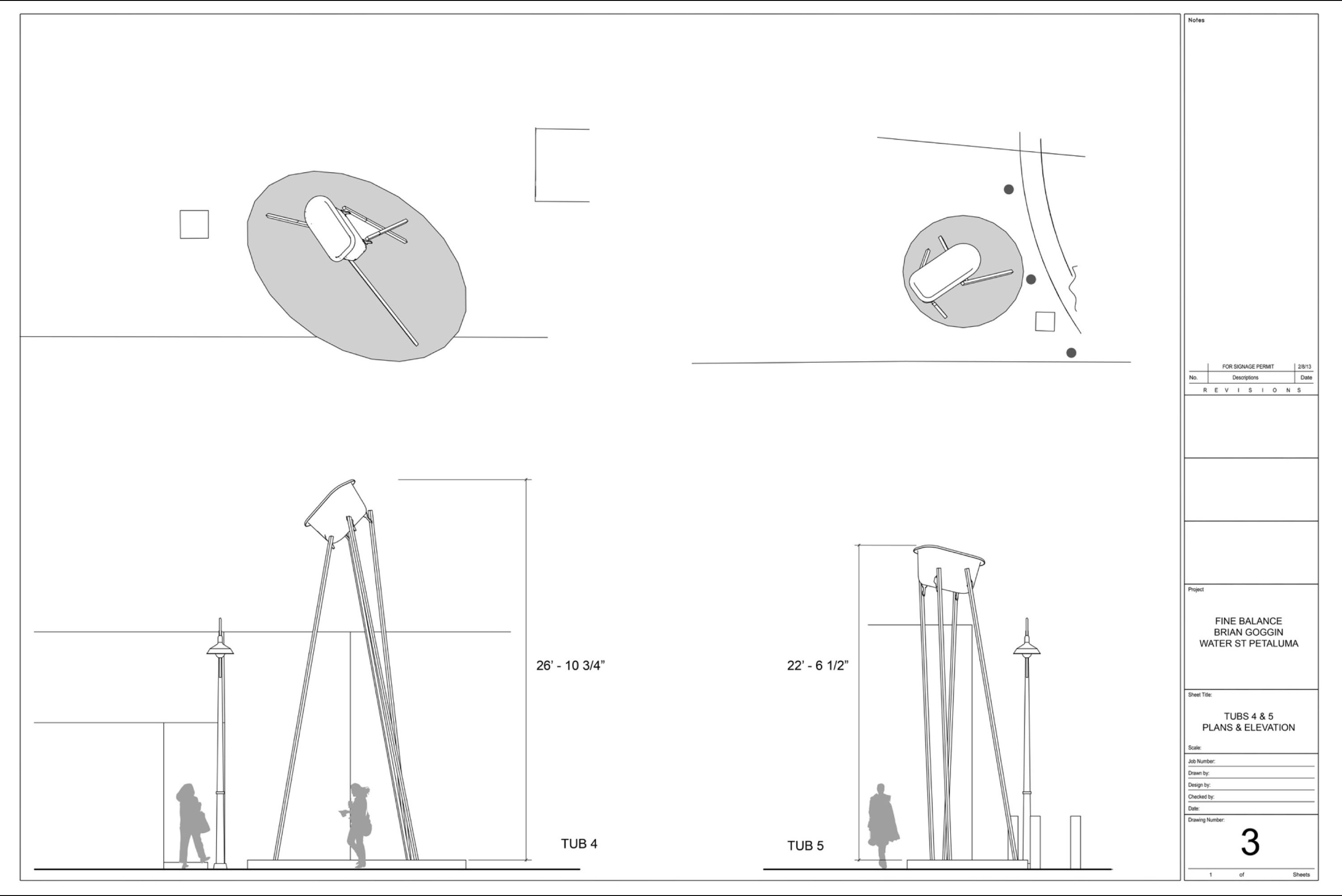
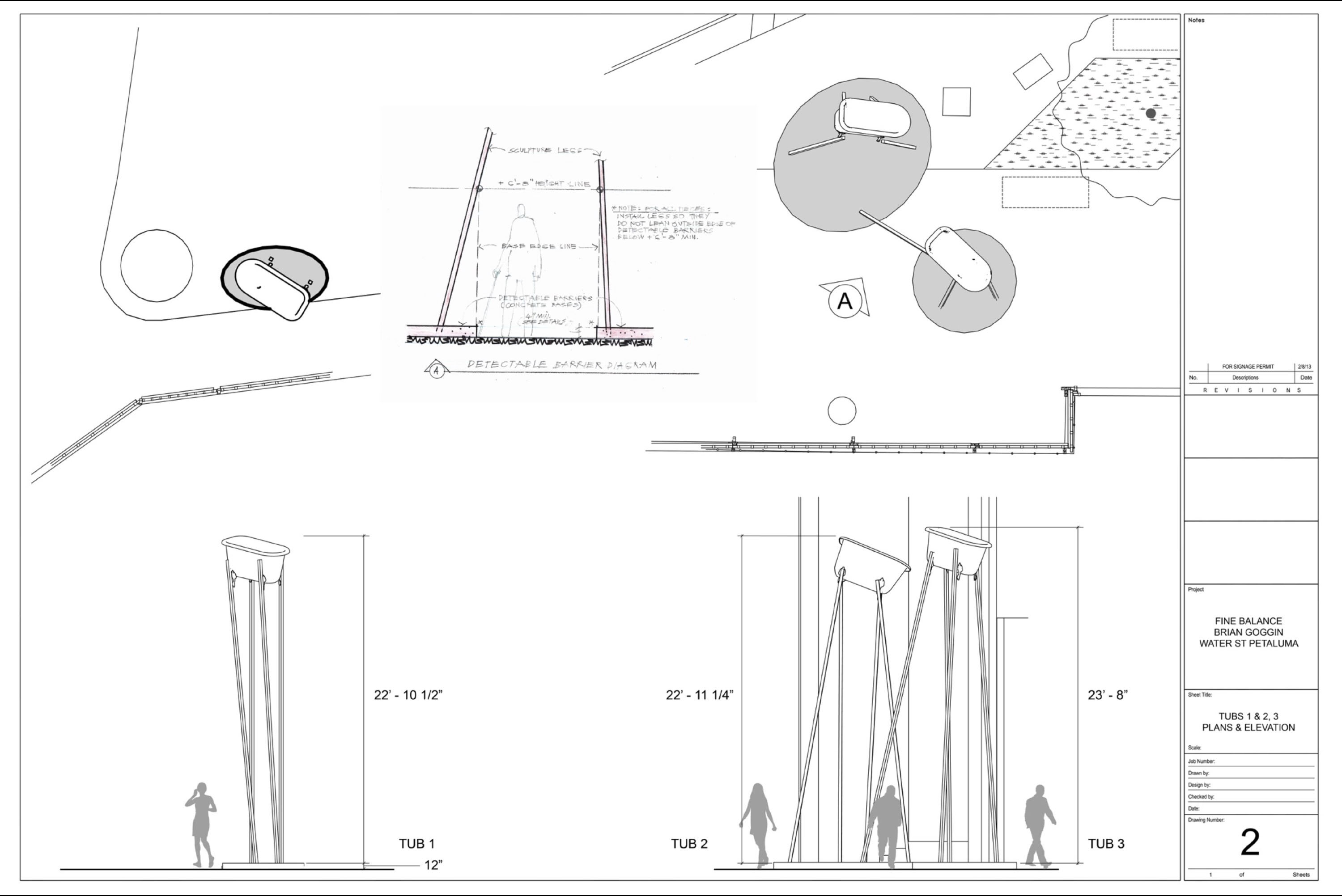
Degenkolb Engineers will collaborate with Goggin to realize the visually precarious effect of cast iron bathtubs balancing tenuously on thin stilts, both possible and safe, using cutting-edge, durable materials. The stilts will be fabricated in corten steel (as were railroad passenger cars in Petaluma) to evoke the organic look and texture of wood. We will use cranes to lift the sculptures to their positions on the waterfront plaza.
** Early composition prior to recent revisions.
The tub forms delicately balancing on stilts may be seen as a physical expression of the sensitive manner in which Petaluma navigates the path forward, while maintaining its treasured heritage, agricultural roots and eclecticism. During the day the sculptures will create images and shadows on the sidewalk and nearby buildings offering depth and contrast to the composition.
At dusk, the silhouettes will be limned by the transition from day to night. At night, the work will be illuminated with warm light. Each tub will have dedicated uplights that will illuminate the sculptures. Each uplight will be powered by a low voltage power supply with an integrated photocell to ease with automation.


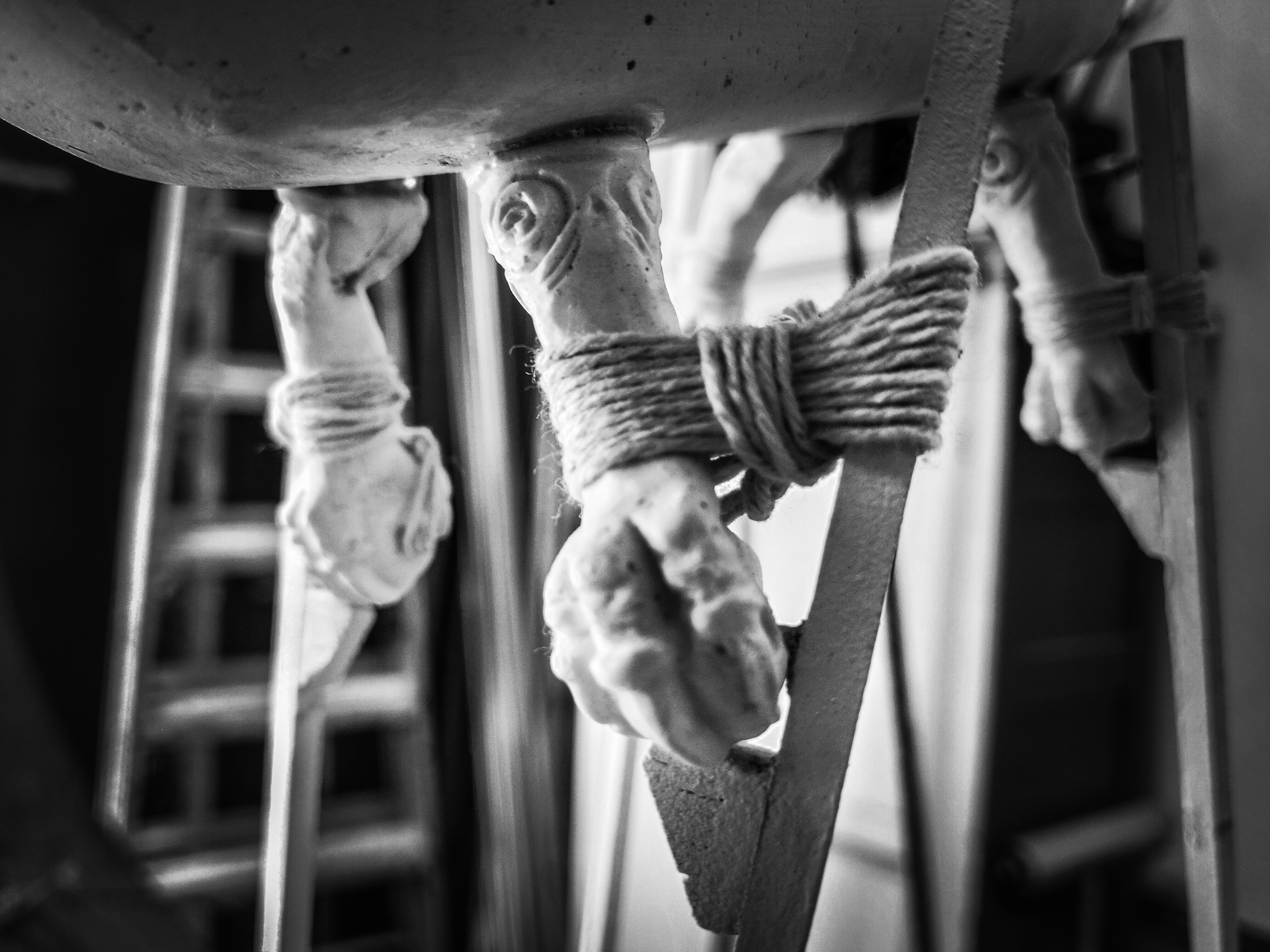


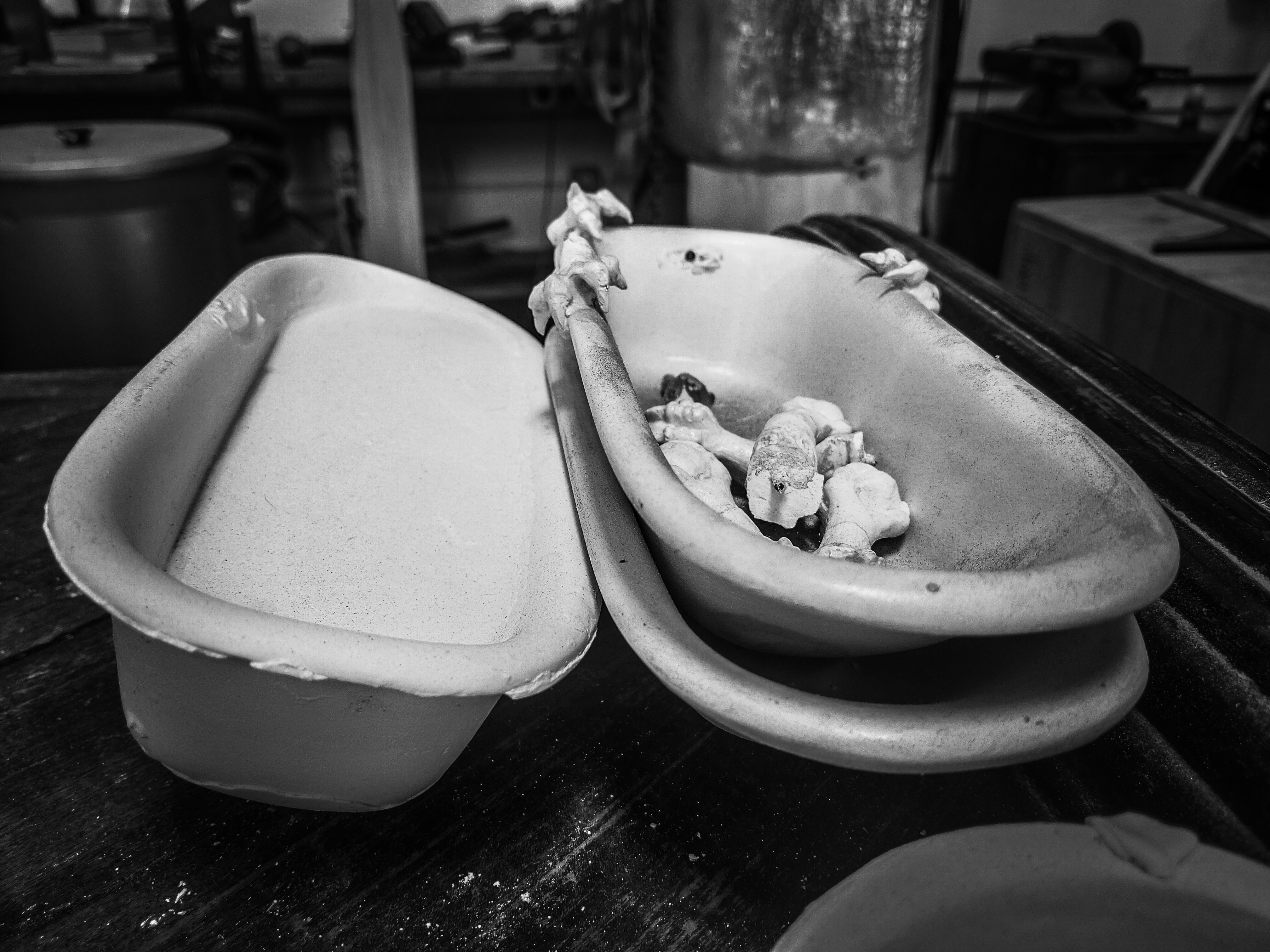
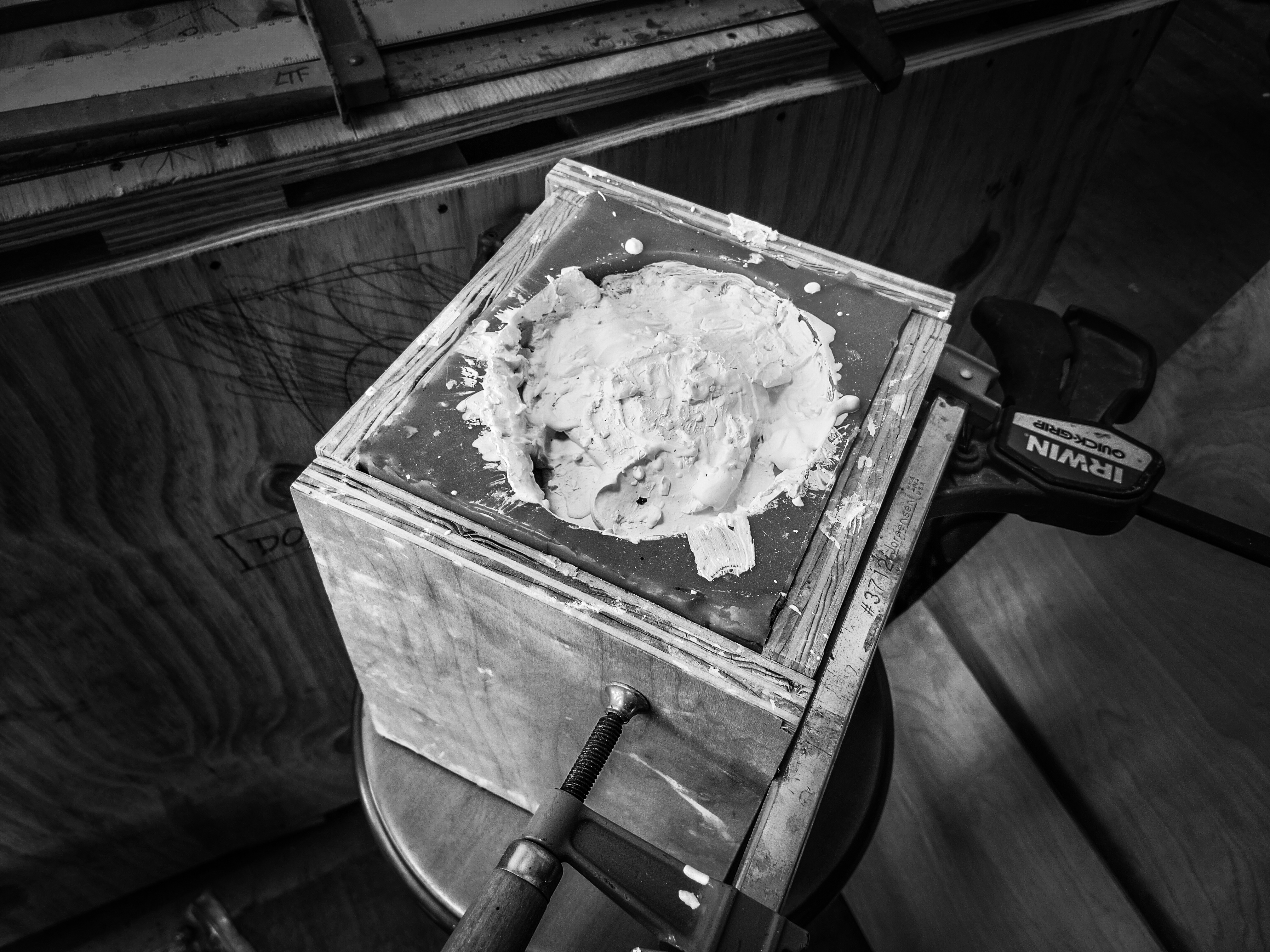



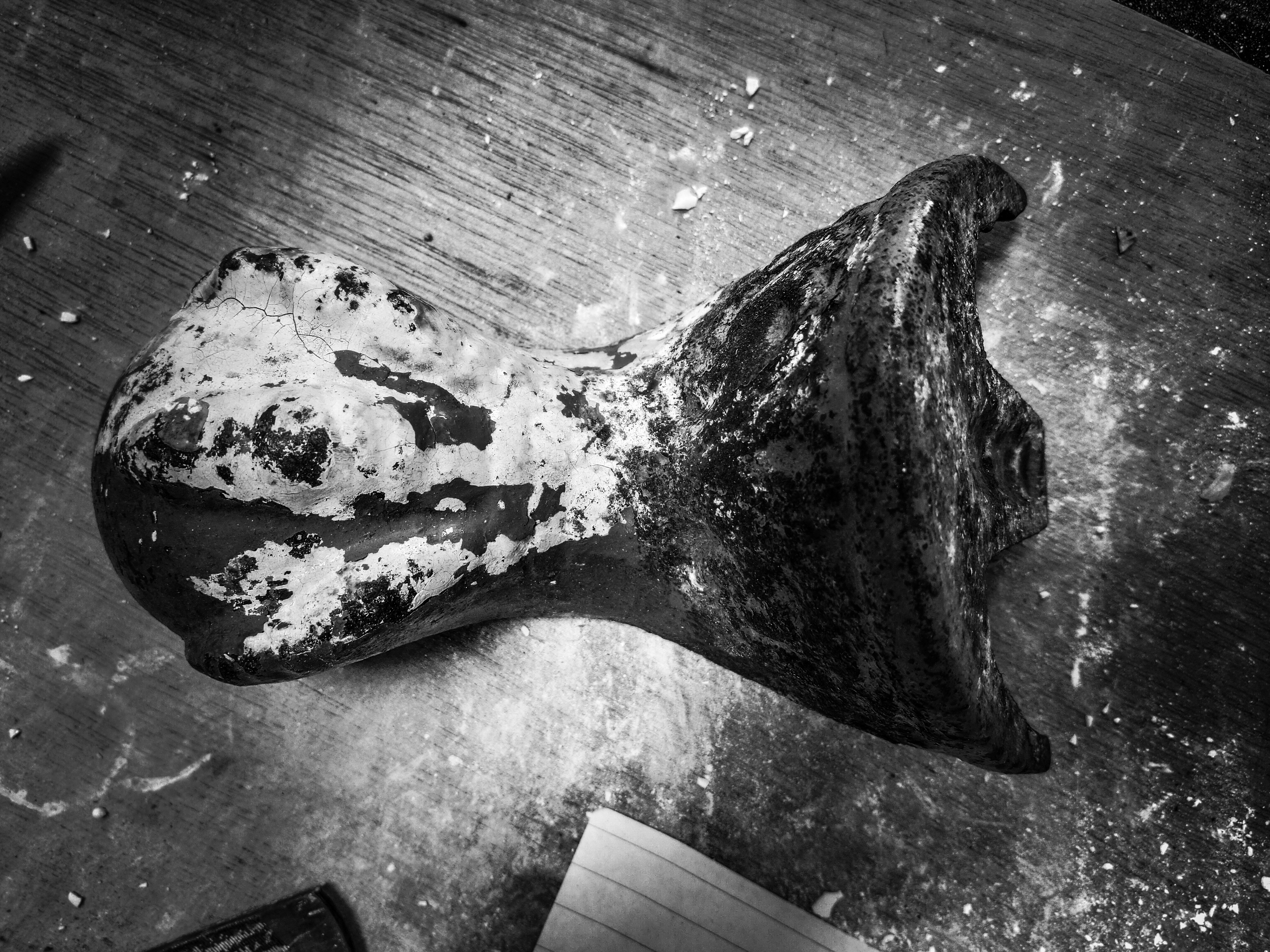


Goggin will use salvaged Victorian claw and ball bathtubs, ideally collected from Petaluma residents. The work is being fabricated in Goggin’s San Francisco studio. Goggin will retrace the path of the ninteenth century cast iron buildings and bathtubs in a pilgrimage to Petaluma by traditional sailing scow, a flat-bottom sail boat, often used to serve inland waterways such as Petaluma.
We would like to engage the San Francisco Maritime Museum to determine the viability of using the Alma, an original sailing scow built in San Francisco in 1891 that used to make the journey regularly to and from Petaluma. The transportation of the artwork using the once active trade route between Petaluma and San Francisco offers a physical connection to the past and present context of the site.